
San Joaquin County Arrest Reports
The main multi-day source is the Sheriff's Activity Log. It collects releasable incidents and arrests from calls for service to the San Joaquin County Sheriff. The online window covers 30 days. Updates are supposed to land about every 24 hours. Even so, the department promises no exact posting hour and posts no separate holiday schedule.
Remember that this is an incident blotter, not a jail roster. It adds context. Reported circumstances, disposition, and location can flesh out Sheriff activity across San Joaquin County. Confidential calls and unreleasable information stay out. The department also warns that early investigations are preliminary and entries may be reclassified later.
Read San Joaquin's Sheriff Blotter
Start with the report date and the agency's scope. Read any public warnings attached to the entry. The timestamp usually reflects when someone reported the incident to the Sheriff, not necessarily when it happened. Booking time, court dates, and any later press statement can each differ from that report time.
- Open the Activity Log and confirm the displayed date range falls within the current 30-day window.
- Read the report time as the time received by the Sheriff unless the entry states otherwise.
- Use the rounded location only as broad event context; addresses are shown to the nearest whole hundred block.
- Read the remarks and disposition as preliminary, releasable information rather than a complete investigation.
- Use WIC or the daily booking log to determine whether a related county jail booking exists.
The Arrested Today page works differently. It covers a fixed prior-day booking window. Keep the two sources separate. One tracks jail bookings during a daily cut, while the other reports Sheriff calls across several weeks of San Joaquin County activity.
San Joaquin Blotter Entry Fields
The Activity Log stresses call and incident facts. A booking record stresses custody intake instead. Each field belongs to the system that produced it. Read a blotter entry and a jail record on their own terms.
| Log element | Meaning and limit |
|---|---|
| Reported date and time | When the Sheriff received the report, which may not be the event or booking time. |
| Location | A rounded hundred-block location, not an exact address. |
| General remarks | Releasable initial information that can change as facts develop. |
| Disposition | The call's operational outcome, not necessarily a criminal court disposition. |
| Agency scope | Sheriff calls and activity, not a full list from Stockton, Tracy, or Manteca police. |
| Booking photo | No routine booking-photo feed is shown or promised by the Activity Log. |
The official Sheriff Activity Log capture shows the public multi-day source and its interface.
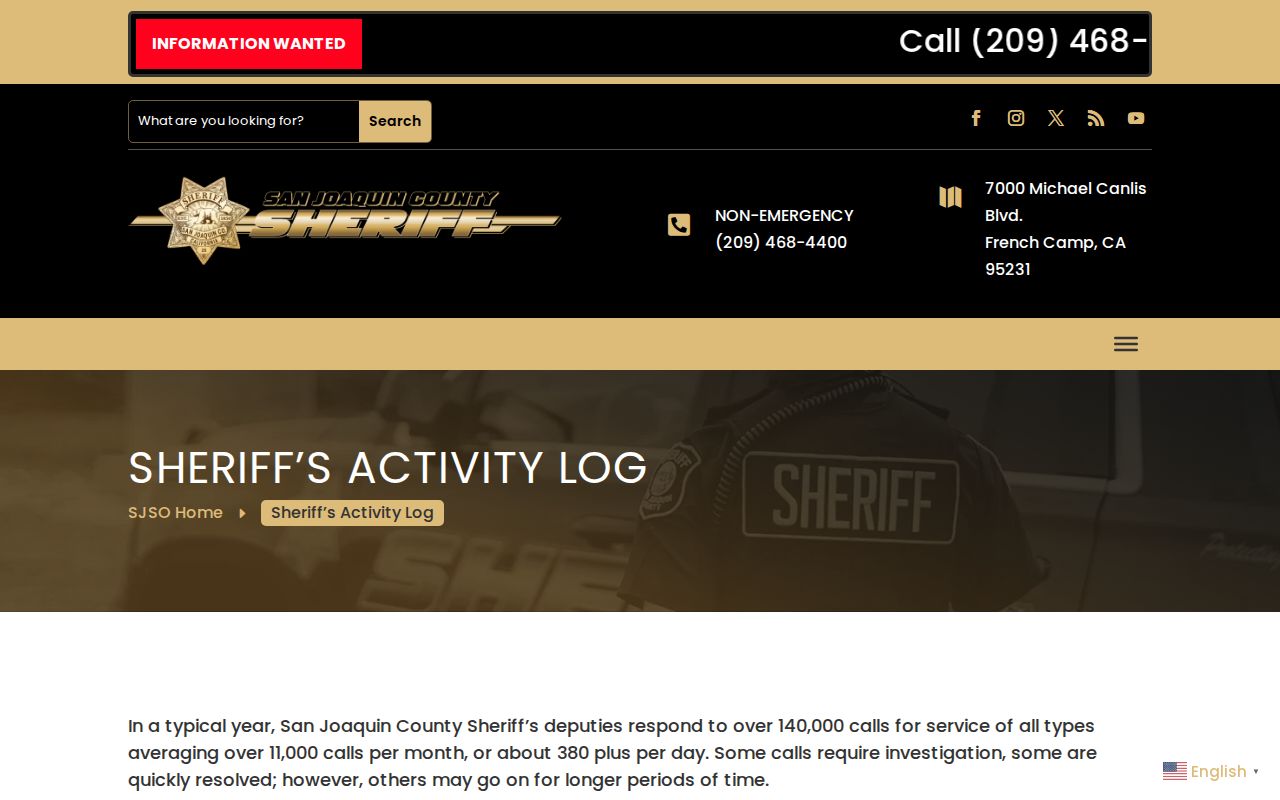
The capture should be read with the source's preliminary-data, rounded-address, and retention warnings.
San Joaquin Weekend Arrest Reporting
The Sheriff aims to update the log about every 24 hours. No weekend or holiday exception is published. A late-cycle call can wait for the next update. A related booking may also post before or after its activity entry. Dispatch, investigation, arrest, transport, and intake are separate events, so timing rarely lines up neatly.
Do not call a Monday cluster a weekend surge. It may just reflect the reporting cycle. Compare entry dates, report times, and booking times first. The county also cautions that geographic area counts are not comparable at face value, since areas differ in size and population.
Older San Joaquin Arrest Reports
The Activity Log keeps only 30 days online. No deeper official archive exists. An entry rolling off does not erase the arrest. If the Sheriff did not make the arrest, contact the arresting agency, or search the court register once charges were filed. Ask the Sheriff's Records Division for the report.
A useful request names the approximate date, location, and incident or report number. It also states exactly which record you want. The Sheriff's public-records request form helps spell out delivery, though current agency instructions govern submission. Court records show what happened after filing, but they never replace the original law-enforcement report.
San Joaquin County Sheriff Records Division7000 Michael Canlis Boulevard
French Camp, CA 95231
(209) 468-4409
Local San Joaquin Arrest Coverage
News coverage fills a gap in San Joaquin County. The 30-day booking window closes eventually. After that, local outlets may be the only place with arrest details still online. The Manteca Bulletin police briefs run frequent short items on arrests and police activity. Its crime section goes deeper. Stocktonia and The Record handle public safety across Stockton and the county. Tracy's papers tend to report only when something big happens. Schedules differ, and corrections appear without fanfare.
City police releases cover less ground than people assume. Tracy keeps a dated news archive that announces arrests. Manteca posts police and public-affairs material, while Stockton shares calls-for-service data. None of these equals a county jail roster. A city announcement tells you an arrest happened. A WIC check tells you whether the person sits in Sheriff custody now.
Note: The Manteca Bulletin police briefs page shows one local news layer that can sit alongside official San Joaquin arrest reports.
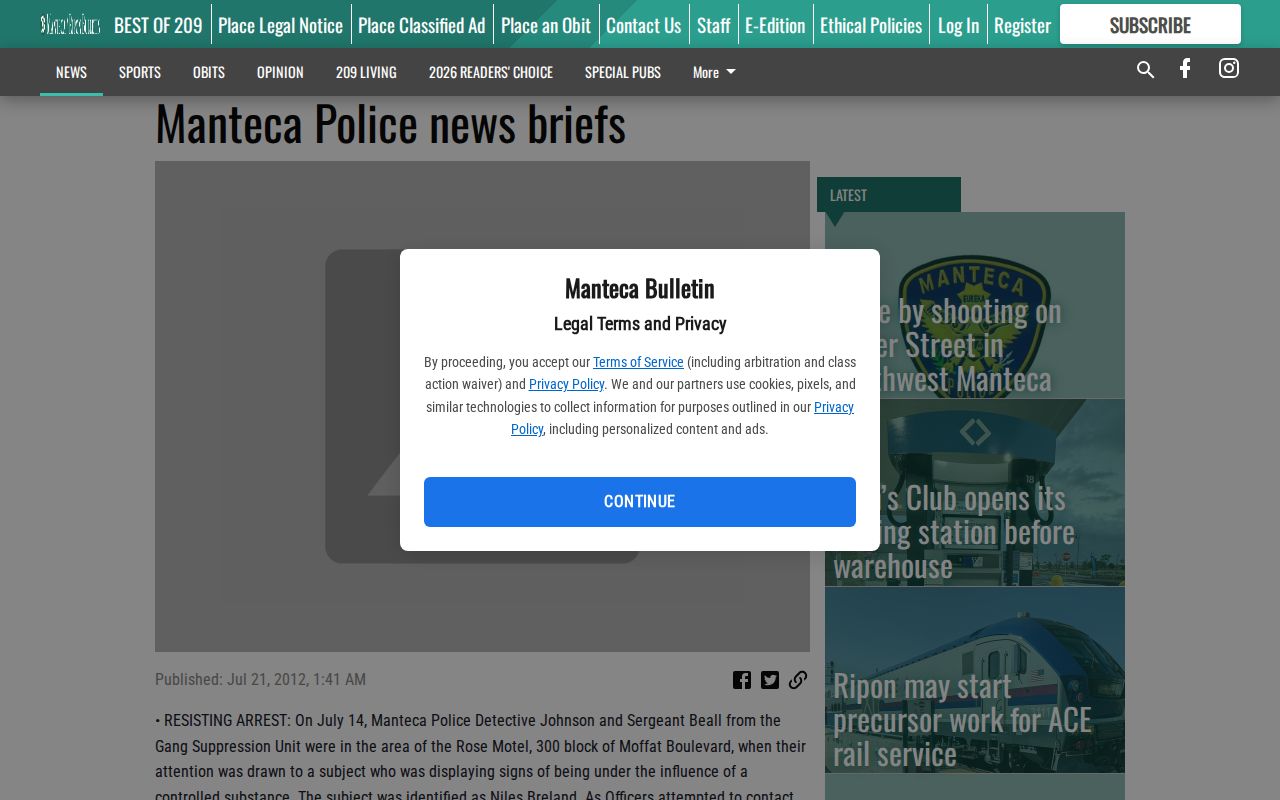
News archives add narrative detail. Still, check every fact against the agency record.
Unofficial arrest indexes reach much farther back than the Sheriff's 30-day window. Their entries can be stale, duplicated, or wrongly matched. Some sit detached from any later court action. Treat them as leads, never as the first word on a San Joaquin County record.
No commercial photo page can confirm present custody. Local Crime News maintains an unofficial San Joaquin County Sheriff index with broad historical searching. RecentlyBooked also hosts a county page and notes that the county does not provide mugshot images. Neither speaks for the Sheriff, so verify any useful lead through the originating agency and the court.
San Joaquin Reports Are Preliminary
San Joaquin court records tell a different story than a booking entry. The court runs its own public case search. You can query it by name or case number. That is the whole toolkit. There is no date-of-birth field and no driver's-license option, so a common name returns plenty of noise.
Treat the results carefully. The search is not a certified record either. When a case number matches a San Joaquin arrest entry, compare the dates as well. Names repeat across the county. Checking both fields keeps you from attaching someone else's court case to the person arrested.
- Incident report
- An agency account of a reported event and its initial handling.
- Booking record
- The jail's intake record after a person is accepted into custody.
- Disposition
- The later legal outcome recorded by the court.
- Archive
- Records retained after an item leaves the current public display.
Old San Joaquin material lives on in news archives and historical collections. The San Joaquin County Historical Society holds research materials. So does the California State Archives. Neither works as a current person lookup, though. Their strength is historical context, not today's jail roster. For a recent arrest report past the online window, an agency records request or the court register is the direct path.
Photos deserve the same caution. The Sheriff Activity Log is not a booking-photo feed. No routine booking image is promised there. A photo attached to a police release or news story serves a different purpose than a booking photograph taken at the jail. California Penal Code section 13665 restricts how law enforcement posts booking photos on social media, with defined exceptions. It does not turn a blotter row into a mugshot record. Corrections, amended charges, and dismissals can arrive after the Activity Log rolls off, so keep the source date next to any later court result. With no online archive, good notes matter most.